

Flexibility Meets Productivity: How Co-Working Spaces Are Revolutionizing Your Work Experience

Flexibility Meets Productivity: How Co-Working Spaces Are Revolutionizing Your Work Experience
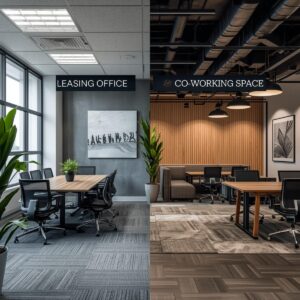
The New Office in the Making — From Commercial to Co-Work Spaces
The global workspace model is undergoing a massive shift — from rigid, long-term commercial leases to agile, community-driven co-working environments. This transformation is being accelerated by changing consumer expectations, rapid technological adoption, and evolving corporate operations.
The Old Business Lease Model
Traditionally, firms secured multi-year commercial leases for designated office spaces tailored to specific business needs. While this offered predictability, it also came with rigid commitments, high overheads, and little room for adaptation. As the culture of telecommuting and hybrid work expanded, these traditional models began to feel more like obstacles than assets — tying companies down when flexibility became the new currency of efficiency.
Pandemic and the Rise of Hybrid Work
The outbreak of COVID-19 in 2020 reshaped how the world works. Overnight, remote work became the norm rather than the exception.
Research by McKinsey revealed that office attendance plunged by nearly 90% in major cities such as San Francisco and New York. By 2022, attendance stabilized at an average of 3.5 days per week, marking a 30% overall decline from pre-pandemic levels.
This behavioral shift prompted companies to reconsider their dependence on traditional leases. In the new world of work, hybrid models—balancing remote flexibility with periodic in-office collaboration—have emerged as the sustainable solution. Businesses now seek flexible office configurations that align space usage with actual employee presence.
Co-Working Spaces: The Flexible Alternative
This is where co-working spaces step in — redefining the concept of a modern workplace. These shared spaces allow businesses to rent offices and meeting rooms on flexible terms, eliminating the burden of long-term commitments.
For companies adapting to hybrid work, co-working setups offer cost efficiency, adaptability, and scalability, ensuring that office resources match real-time business needs.
Key Benefits Driving the Shift to Co-Working
- Flexibility and Economy of Scale:
Firms can scale operations seamlessly—expanding or contracting workspace based on workforce changes, without being tied to years-long leases. - Technology and Infrastructure Access:
Premium co-working centers come equipped with smart meeting rooms, 360° HD video conferencing systems, and integrated tech tools that make hybrid collaboration smooth and professional. - Improved Work-Life Balance and Productivity:
Employees benefit from environments that balance social interaction with flexibility, enhancing focus and morale. - Encouraging Innovation and Networking:
Co-working hubs foster cross-industry collaboration and creative synergy, connecting professionals from diverse sectors under one roof.
The Future Outlook
As hybrid work cements itself as the “new normal,” co-working spaces are expected to play a central role in the global office landscape. They align perfectly with the modern demand for flexible, tech-enabled, and community-driven workplaces that support both remote and in-person productivity.
Forward-thinking companies are already downsizing traditional leases and partnering with adaptable real estate providers to optimize operational costs and workforce satisfaction.
Baghnath Enterprises — Shaping the Future of Flexible Real Estate
At the forefront of this transformation, Baghnath Enterprises stands as a leading real estate firm offering customized corporate leasing solutions, flexible co-working infrastructure, and commercial space consultancy. With a deep understanding of post-pandemic workplace trends, Baghnath Enterprises bridges the gap between modern corporate requirements and smart, sustainable property solutions.
Their portfolio includes shared office setups, hybrid-ready commercial hubs, and scalable workspace models that help businesses stay agile and competitive in the new economy.
Conclusion
The transition from conventional long-term commercial leases to co-working spaces reflects a deeper cultural and operational evolution. Driven by technology, efficiency, and human-centered design, this shift redefines not just where we work — but how we thrive.
With trusted partners like Baghnath Enterprises leading this movement, the future of work is not confined by walls or contracts, but inspired by flexibility, innovation, and collaboration.